
By Beatriz Roldan Martinez
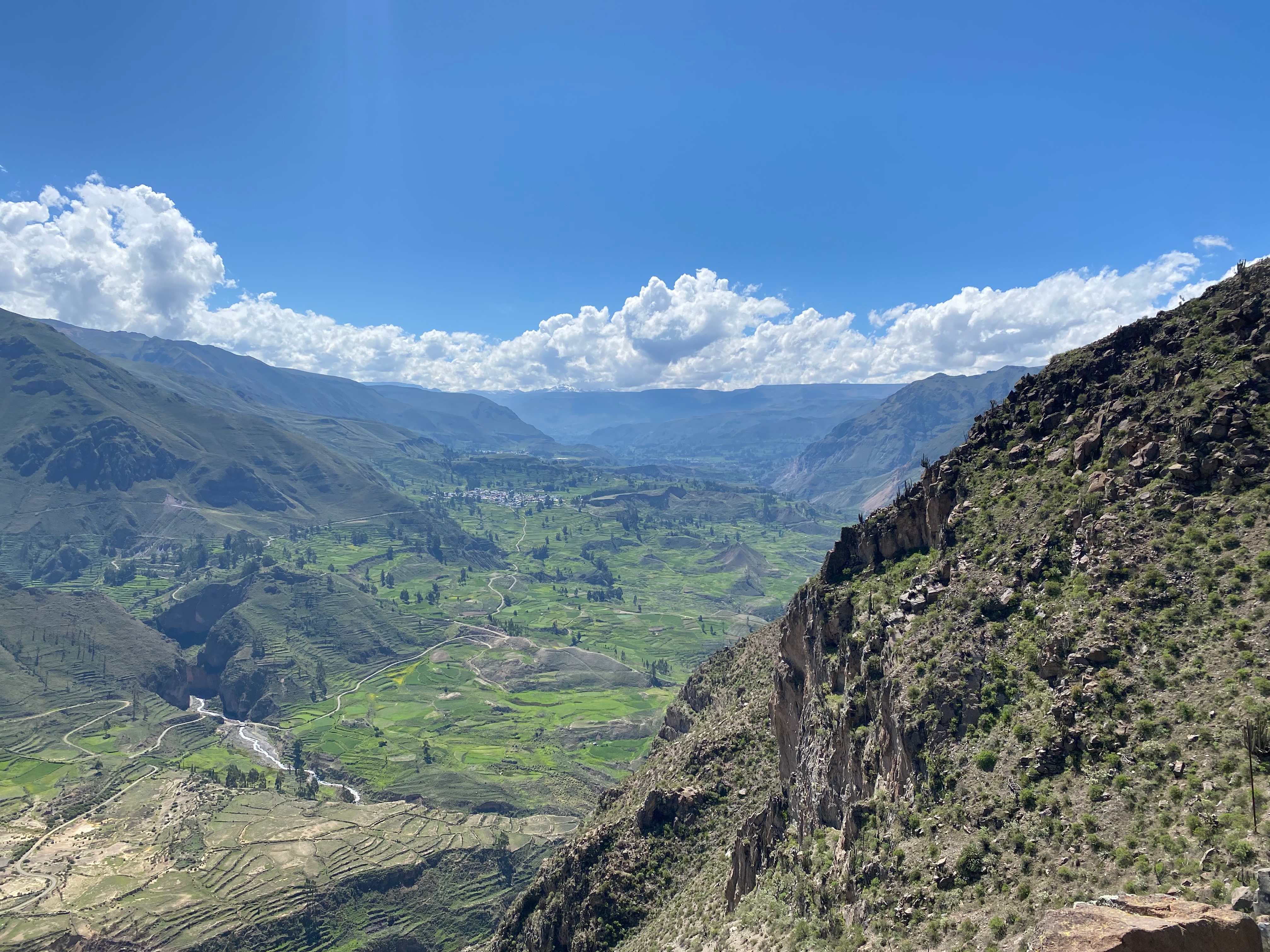
From the heights of Chimpamayo hill, where the wind caresses ancient stones, the Chimpa Fortress watches over the Colca Valley just as it did centuries ago. This Collagua archaeological site, built entirely of stone, was a ceremonial and strategic center, surrounded by walls, colcas (storage structures), lithomodels, tombs, and cave paintings that narrate the agricultural and spiritual life of its ancient inhabitants.
A resident of Madrigal tells us that the Chimpa Fortress is the most beautiful part of Madrigal. From there, you can see the entire valley, and nearby are the hanging tombs of Charcoya—another corner full of living history.
Another local shares that these spaces weren’t valued in the past, but now, thanks to tourism, the community is beginning to appreciate them again.
The Chimpa Fortress is not just stone: it is memory, it is culture, it is community. From its summit, you can see the towns of Madrigal, Lari, Ichupampa, Pinchollo, Cabanaconde, and Tapay. And although reaching it requires a one-hour hike, each step connects the visitor with the legacy of the Collaguas.
💬 Local voices also express that tourism can bring benefits beyond preservation and sharing Chimpa’s history. However, they acknowledge that infrastructure, training, and organization are still lacking. They want to learn English, improve service in lodgings and restaurants, and share their culture with those who visit.
📸 If you visit Madrigal, don’t miss the Chimpa Fortress. It’s not just a viewpoint: it’s a portal to the past, an opportunity to walk with purpose and discover a town that awaits with open arms.
👉 Have you visited the Chimpa Fortress? What did you feel while you were there? What would you like more people to know about this place?
Leave a Reply